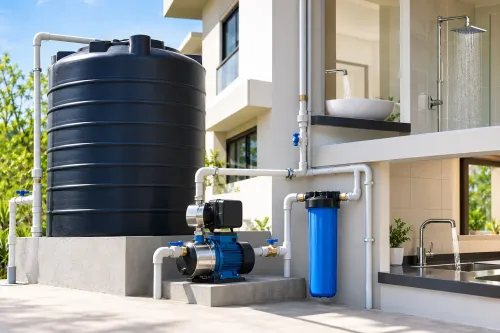

Buying Grundfos Pumps should begin with system requirements rather than selecting a pump only from its motor rating or connection size. Pumps operate as part of a hydraulic system, and an incorrect selection can lead to inadequate water delivery, unnecessary energy use or unstable operation.
One common mistake is focusing only on flow.
A pump must generally satisfy both the required flow rate and the head needed to move water through the system. Static height, pipe length, fittings and other resistance can influence the total requirement.
Oversizing is another issue. Choosing a larger pump “for safety” does not automatically improve a system. A pump that is poorly matched to operating conditions may create excessive pressure or inefficient operation.
Undersizing creates the opposite problem. Water may not reach required points at the expected pressure, particularly during periods of higher demand.
For residential, commercial and industrial projects in Nashik, Maharashtra, buyers should gather basic system information before selecting equipment.
Useful details include:
- Required flow rate
- Required operating pressure
- Static elevation
- Source and destination of water
- Pipe sizes
- Expected usage pattern
- Number of simultaneous outlets
- Control requirements
- Installation environment
- Power availability
The application also matters. Water transfer, circulation and pressure boosting are different duties and should not automatically use the same pump-selection logic.
Controls deserve attention too. In systems with changing demand, the way a pump starts, stops or adjusts operation can influence user experience and system behaviour. The appropriate control arrangement depends on the application and equipment configuration.
Installation conditions should be checked before procurement. Adequate access is needed for inspection and future servicing. Piping should be properly supported, and the surrounding installation should follow applicable manufacturer requirements.
Another common mistake is purchasing equipment before the plumbing design is sufficiently developed. If pipe sizes, tank locations or demand assumptions change later, the originally selected pump may no longer be appropriate.
Mukta Group supports pump and plumbing-related requirements for projects in Nashik. Providing technical details rather than requesting “a pump for the building” makes it easier to identify suitable options.
Price remains an important purchasing factor, but it should be compared after technical suitability has been established. Two pumps cannot be meaningfully compared if they are designed for different operating points or applications.
A well-performing pumping system starts with accurate information. Establishing flow, head, application and control requirements before selection helps project teams avoid the common cycle of buying equipment first and troubleshooting system performance later.
Keywords