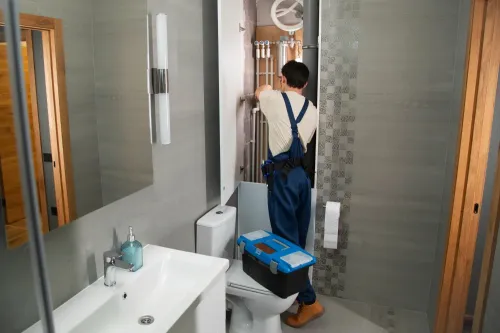
A commercial washroom can look right in a catalogue and still fail on pressure, maintenance access, compatibility or replacement parts. By following a structured store-based procurement process, facilities teams can compare materials, test complete fixture systems and approve an installable bill of materials before products reach the site.
Key takeaways
- Inspect basin projection, handle clearance and spray pattern at full scale.
- Convert every approved design choice into a coded, quantified order.
- Compare materials by cleaning load, moisture exposure and replacement risk.
- Use the Nashik store to resolve product, delivery and installation gaps.
Why a physical store improves commercial bathroom procurement
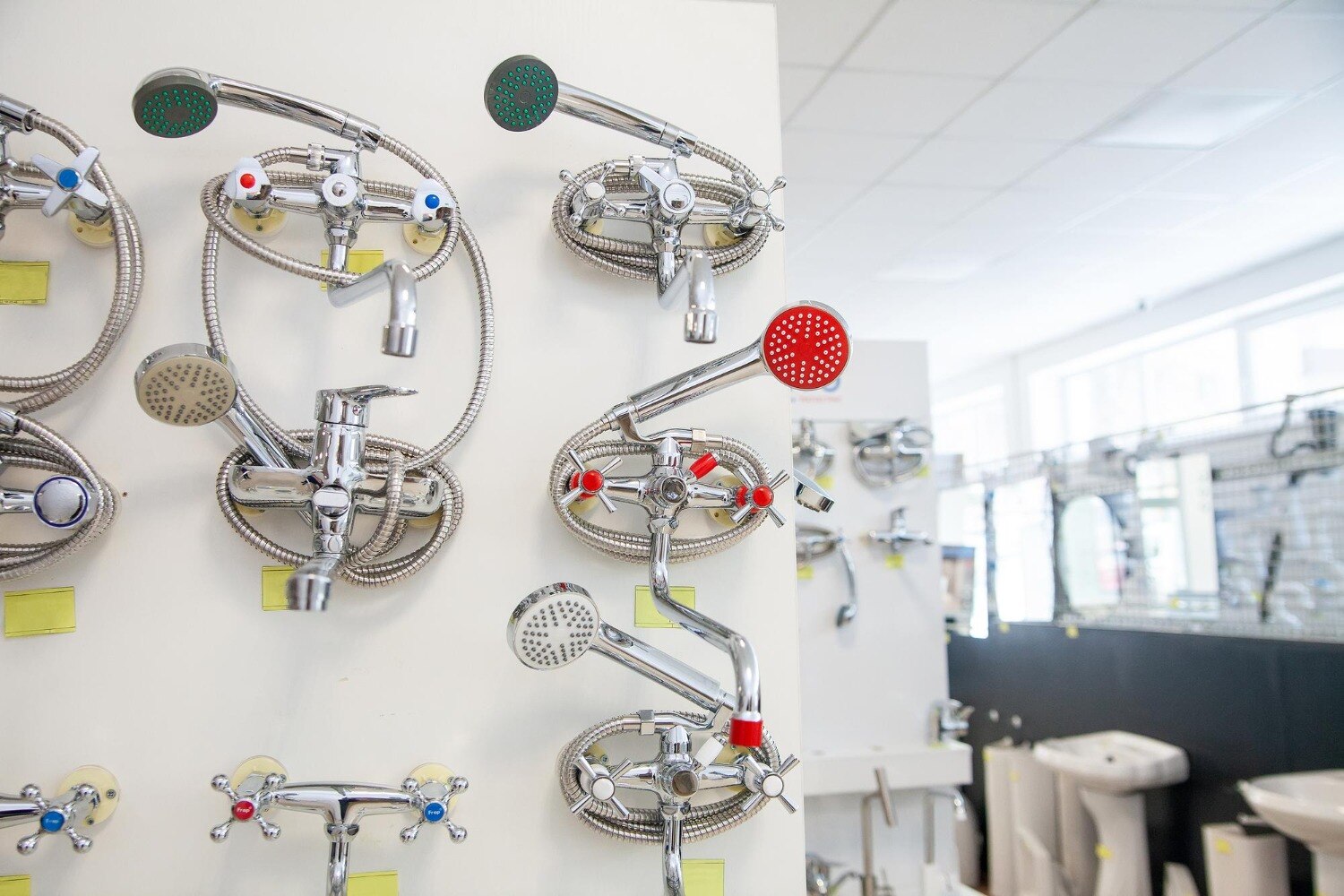
A commercial bathroom fittings store lets project teams approve installed performance, not a catalogue image. At full scale, buyers can inspect finish accuracy, basin projection, handle clearance, spray pattern, flush operation and cleaning access.
That exposes a tap that collides with a backsplash, a basin that projects into a circulation route or a flush control that cannot be reached comfortably.
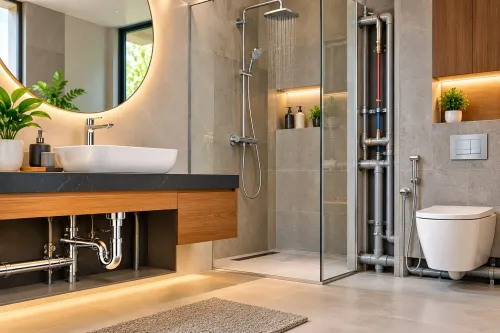
A visually attractive sample is not a coordinated bathroom. Approve the complete system, including:
- Basin, faucet, waste coupling, trap and brackets
- Valves, connectors, sealants and access panels
| Procurement route | What you can verify | Common risk |
|---|---|---|
| Physical store | Full-size alignment, operation, finish and service access | Requires a planned visit with drawings and specifications |
| Separate online listings | Individual prices, images and stated dimensions | Mismatched finishes, missing accessories and unclear substitutions |
| Trade suppliers | Availability and trade terms for selected products | Delivery gaps between suppliers and incomplete installation scope |
One coordinated source reduces mismatched finishes, omitted accessories, undocumented substitutions and deliveries that arrive before the site is ready. It also gives the team one place to resolve whether a basin, trap, tile edge, waterproofing layer and access panel will work together.
Use a commercial bathroom fittings store to compare sensor faucets, timed-flow faucets, manual mixers, flush valves and flush tanks under expected building usage. Check activation reliability, battery or electrical access, vandalism exposure, maintenance access, required pressure and complete-flush performance—not appearance alone.
A plumbing store in Nashik adds value when it tests those choices against the building’s measured pressure and water quality, since scale and corrosion can shorten the life of aerators, cartridges, solenoid valves and flush components.
The six-step process for turning a design into an installable order
1. Count every bathroom, room type and fixture position from the latest plans. Mark basins, toilets, urinals, showers, floor drains and accessible fixtures so the purchase order reflects actual locations rather than a rough room total.
2. Prepare a fixture schedule with model numbers and quantities. Record inlet size, pressure range, flow rate, waste outlet position, rough-in dimensions, mounting method, finish, cartridge type, service opening and spare-parts code for every fitting.
3. Obtain physical samples or full-size demonstrations before approval. Test basin projection, handle clearance, sensor activation, flush operation, spray pattern, cleaning access and the visual match between finishes at the intended viewing distance.
4. Confirm the schedule against plumbing, drainage, electrical and ventilation drawings. Check that faucets suit basins, waste couplings and traps; concealed cisterns suit flush plates, carrier frames and supply pressure; and shower channels suit floor falls, waterproofing layers, tile thickness and drainage capacity.
Confirm sensor power or battery access, isolation valves and exhaust routes before walls or ceilings close.
5. Document every approved substitution by original model, replacement model, reason, finish, dimensions, performance, warranty and spare-parts impact. Do not accept “equivalent” on a quotation without written confirmation that connectors, cartridges, diaphragms, brackets and access panels still fit.
6. Coordinate phased delivery with site readiness. Release carriers, concealed cisterns, valves and rough-in components before framing; deliver tiles, basins and exposed fittings after waterproofing, wall finishes and secure storage are ready. Identify replacement components before floors or walls are closed, then issue the purchase order against the signed schedule and drawings.
How to compare modern bathroom design materials by use and risk
Ceramic sanitaryware is the practical baseline for offices, hotels and schools: its glazed surface cleans easily, repairs are familiar, and replacement pans, basins and flush components are widely available. Choose materials against the failure you expect, not a luxury-residential look.
| Material | Water resistance and cleaning | Impact and slip risk | Repairability, life and availability |
|---|---|---|---|
| Ceramic sanitaryware | Impervious glaze; routine disinfectant cleaning is straightforward | Resists normal use but chips under hard impact; floor slip rating does not apply to the fixture | Familiar repairs and broad replacement supply; long service life |
| Porcelain tile | Very low absorption and strong performance under heavy traffic; grout still needs cleaning | Select texture and rating for wet floors; verify slip resistance | Damaged tiles can be replaced by batch; long service life if substrate and grout are sound |
| Natural stone | Needs sealing and stain management; porous stones demand more cleaning control | Hard but can chip; polished finishes can become slippery when wet | Repairs and matching replacements are difficult; life depends on sealing and maintenance |
| Engineered surfaces | Consistent, low-porosity appearance with predictable cleaning | Good impact performance, depending on resin and thickness; confirm wet-floor rating | Planned repair kits and spare panels matter; replacement matching is controlled |
| Stainless steel | Highly water-resistant and hygienic; tolerates intensive cleaning | Excellent impact resistance; floor applications still need a tested slip surface | Dents are difficult to conceal, but standard grades and fittings remain available |
| Coated metal | Finish variety with cleaning limits set by the coating | Scratches, chips and corrosion expose the substrate; avoid unverified wet-floor use | Panels can be replaced by finish code, but discontinued coatings create risk |
For wet-area flooring, request ANSI A326.3 dynamic coefficient of friction testing. The Tile Council of North America uses 0.42 wet DCOF for level interior spaces likely to be walked on when wet; it is not a universal safety guarantee.
Use porcelain for busy retail or industrial areas, stainless steel for intensive-use facilities, natural stone for controlled hotel zones, and repair-planned engineered or coated systems where appearance matters. Hospitals also need cleaning-chemical compatibility; schools need impact and replacement availability.
The performance and maintenance specifications commercial teams cannot see in a photograph
A photograph cannot show whether a faucet works at the building’s pressure, whether a toilet clears waste, or whether a replacement cartridge will be available. Specify performance before approving the finish.
1. Separate compliance by component. Faucets, valves, flexible connectors and other water-contact parts connected to potable water need certification to NSF/ANSI/CAN 61 or the applicable national standard. Tiles, mirrors and cabinetry follow different approval routes; do not apply the same certificate to every finish.
2. Put flush performance, flow rate, minimum operating pressure, pipe sizing and inlet dimensions in the fixture schedule. For qualifying tank-type and dual-flush toilets, use the EPA WaterSense reference point of 1.28 gallons, or 4.8 litres, effective flush volume when that standard applies.
Measure site pressure and water quality: scale and corrosion can damage aerators, cartridges, solenoid valves and flush components.
3. Check accessibility against the 2010 ADA Standards and local rules. Record clear floor space, turning space, grab-bar locations, lavatory knee and toe clearance, reach ranges and door manoeuvring clearances before walls close.
Treat bathroom materials for facilities teams as a lifecycle inventory, not a finishes list. Record model numbers, cartridges, sensors, batteries, flush-valve diaphragms, finish codes, cleaning restrictions, warranty terms and replacement intervals. This record prevents a discontinued sensor or incompatible cleaning chemical from turning a minor repair into a room closure.
How to use a Nashik store as the final coordination checkpoint
Bring the fixture schedule, plumbing, drainage, electrical and ventilation drawings, water-pressure readings, water-quality information, finish requirements and target handover dates to a modern bathroom design plumbing store in Nashik. The visit adds value when it tests the installation as a system, not when it merely confirms that individual displays look attractive.
- Demonstrate the selected faucets, basins, showers, flush valves, flush tanks, drains and accessories together.
- Verify alignment, basin projection, handle clearance, spray pattern, cleaning access and service openings at full scale.
- Match the fittings to measured pressure and water quality, then ask which aerators, cartridges, solenoid valves and flush components are available as replacements.
- Check sensor power or battery access, carrier frames, isolation valves, connectors, sealants and the tile, grout and waterproofing interfaces.
- Mark every approved substitution, including its model number, finish and quantity, on the bill of materials.
- Confirm phased delivery against room readiness and the target handover date.
Mukta Group can serve as a practical comparison point for buyers seeking a plumbing store in Nashik, provided the visit validates a complete, maintainable system rather than attractive displays. Before issuing the purchase order, require written confirmation of delivery scope, access panels, carriers, valves, connectors, sealants, waterproofing interfaces and service responsibilities.
Also record who supplies missing components and who resolves installation or warranty disputes.
Related products
 | Mukta Plumbing Store Step into our multi-storey showroom and explore a curated range of premium and luxury plumbing solutions designed to elevate modern living, showcased... View product → |
 | TILES Discover Tiles That Define Style at The Tile Studio by Mukta Group At The Tile Studio by Mukta Group, we bring you a curated collection of premium... View product → |
Frequently asked questions
Why do commercial teams use a physical bathroom fittings store?
A store lets teams inspect finish accuracy, basin projection, handle clearance, spray pattern, flush operation and cleaning access at full scale.
What steps turn a bathroom design into an installable order?
Confirm the layout, measure connections and clearances, select compatible products, record specifications, check quantities and coordinate delivery with installation.
How should teams compare modern bathroom design materials?
Compare materials by moisture exposure, cleaning chemicals, traffic, slip risk, repair access, replacement availability and expected maintenance effort.
What should facilities teams verify beyond a product photograph?
Check dimensions, operating clearances, water connections, flush performance, spray pattern, surface finish, cleaning access, installation method and replacement parts.
How can a Nashik store support final project coordination?
Use the store as a checkpoint to reconcile approved samples, product codes, quantities, technical specifications, delivery timing and installer requirements before ordering.
Related products
 | Mukta Plumbing Engineers And Contractors Mukta Plumbing Engineers And Contractors With a strong foundation in plumbing engineering, MPEC has built a reputation for executing high-quality, durable systems tailored to each project’s... View product → |
 | Mukta MEP Mukta MEP is a leading name in the field of Mechanical, Electrical, and Plumbing (MEP) services, known for delivering high-quality, reliable, and... View product → |
Keywords